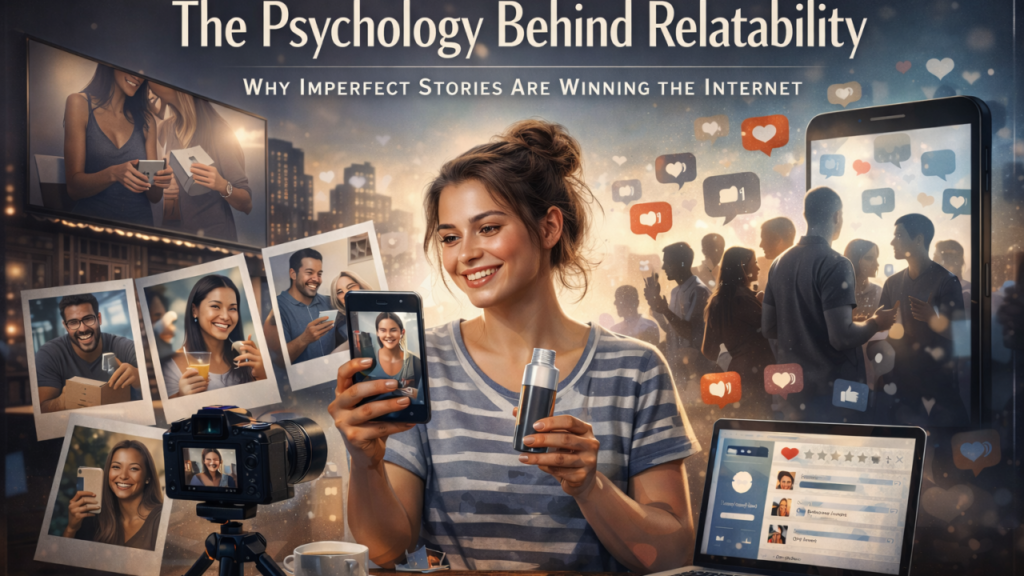
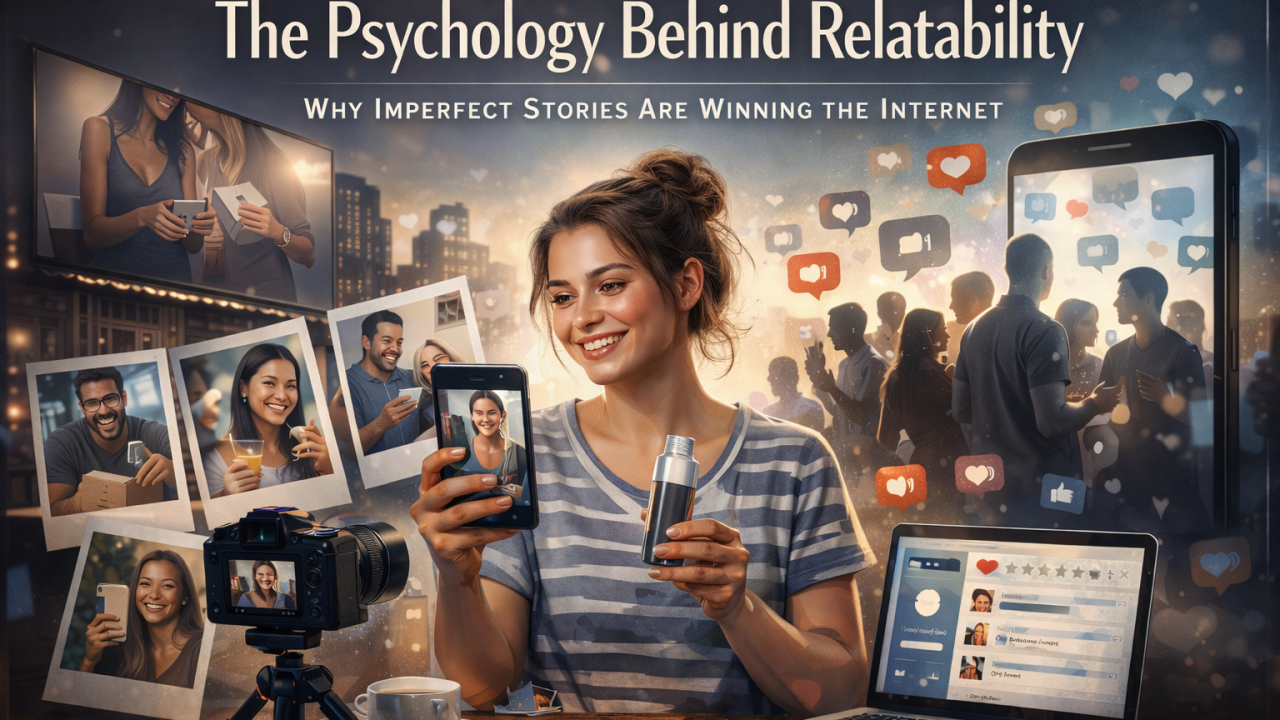
There’s a certain kind of video you’ve definitely seen. It wasn’t meant to go viral. It probably wasn’t even meant to be seen beyond a few friends. Someone is standing in their kitchen, or sitting in their car, talking about a product they picked up last week. The lighting is uneven. They pause mid-sentence to think. Something in the background interrupts them. Still, the video works: it travels, people save it, share it, and act on it.
What makes this strange is not that it happens occasionally, but how often it happens, especially when you consider what it is competing with. On the other hand, there are campaigns built with precision. Scripts refined over weeks. Visuals polished to perfection and budgets large enough to eliminate every possible flaw. Yet those are the ones we forget first.
This contrast points to something more fundamental. The way people decide what to trust has been quietly changing for years, and user-generated content has simply exposed that shift in full view.
We Don’t Trust the Loudest Voice Anymore
A widely cited report by Nielsen found that most consumers trust recommendations from other people more than brand advertising. The statistic gets repeated so often that it starts to feel obvious. But if you stop and think about it, it’s not obvious at all.
We are surrounded by misinformation. We know content can be staged, edited, or even fabricated entirely. And still, a stranger speaking casually into their phone often feels more convincing than a carefully designed campaign.
Part of this comes down to how we read intent. When someone speaks on behalf of a brand, we assume persuasion is the goal. When someone speaks for themselves, especially without polish, we assume expression. That difference matters more than credentials.
The idea itself isn’t new. Robert Cialdini described social proof decades ago. We look to others when we are uncertain. But what has become clearer over time is that we don’t just follow anyone. We follow people who seem familiar.
A person who looks like they share your context, your constraints, even your small everyday problems, carries a different kind of credibility. Not higher, necessarily, but closer.
Why Imperfection Feels Safer
It’s tempting to think that better production should lead to better outcomes. In many cases, it still does. But when it comes to persuasion, especially online, perfection can get in the way.
There’s an old experiment by Elliot Aronson that is often brought up in this context. He found that people tend to like someone more after they make a small mistake, provided they are otherwise competent. The mistake makes them human and reduces distance.
You can see the same pattern in content. A person who stumbles over a word or laughs at themselves doesn’t lose your attention. If anything, they gain a bit of trust. It no longer feels like a performance.
This helps explain why user-generated content tends to outperform more polished alternatives in certain contexts. Studies from Nosto and PowerReviews show that people actively look for reviews, photos, and videos from other users before making decisions. Not as a supplement, but as a primary source.
What those studies don’t fully capture is the feeling behind the behavior. Imperfect content doesn’t just inform but reassures. It tells you that what you’re seeing hasn’t been overly managed. And in a space where everything can be managed, that signal stands out.
From Being Impressed to Feeling Aligned
There was a time when brands tried to impress first. The assumption was simple: if something looks aspirational enough, people will want to move toward it. That logic hasn’t disappeared, but it has weakened. Being impressive is no longer enough as people are looking for alignment.
This is where brands like Glossier found early momentum. Instead of building distance, they reduced it. Real users became part of the brand’s voice. Their routines, their feedback, even their language shaped how the brand showed up.
A similar pattern played out with CeraVe, where a mix of professionals and everyday users created a layered conversation online. The brand didn’t need to dominate the narrative. It benefited from being present within it.
The Decentralization of Storytelling
For a long time, storytelling in marketing followed a predictable structure. Brands created the message. Audiences received it. Feedback, if it existed, came much later and in limited forms.
That structure doesn’t hold anymore. And it hasn’t for a while. Today, anyone with a phone can contribute to how a product or brand is perceived. The story is no longer released. It unfolds, often in ways that are difficult to anticipate.
GoPro leaned into this shift early by building around what users were already doing. Instead of focusing on controlled narratives, it allowed real experiences to define the brand. Airbnb followed a similar path. The most compelling images associated with the brand often came from hosts and guests themselves. Not staged, not overly refined, but grounded in actual experience.
In both cases, the role of the brand changed. It moved from being the storyteller to being part of the environment where stories happen.
Participation Changes Everything
One piece that often gets overlooked is that UGC isn’t just about content. It’s about participation. When someone shares their experience with a product, they are doing more than passing along information by placing themselves within a group. There is a subtle social signal in that act.
You can see this clearly in moments like the Ice Bucket Challenge. People didn’t participate because they were persuaded by messaging alone. They participated because it meant being part of something visible and shared. The same dynamic, in a different form, helped Duolingo build a strong presence online. Its content invited people to respond, remix, and engage rather than just watch.
In another instance, Stanley saw renewed attention after a spontaneous user video demonstrated the product’s durability. The moment wasn’t planned, but it resonated because it felt real and immediate.
Where Brands Still Struggle
Still, many brands approach UGC with the wrong mindset as they try to structure it too tightly. They treat it like another format to manage rather than something that emerges on its own terms. These failed attempts help us realize that authenticity doesn’t respond well to over-direction. The more controlled it becomes, the less convincing it feels. In contrast, brands that navigate this well tend to focus less on directing outcomes and more on creating conditions. Patagonia, for instance, built credibility over time through consistent actions when it communicated something bold; people paid attention because it aligned with what they already believed about the brand.
The Shift We Can’t Ignore
People have always relied on each other to make decisions, recommendations, observations, and shared experiences. Digital platforms have made it easier to see how others think, feel, and respond in real time, where UGC is simply the most visible expression of that. Inferring this trend, it can be concluded that marketing is, in some ways, catching up to human behavior rather than shaping it. Moreover, relatability emerges when people see themselves reflected in what a brand enables, not just what it says. And that is why the imperfect video still wins. Not because it tries harder, but because it feels closer.